A water bath chiller is a common sight in today’s home bathrooms, garages, and wellness corners.
Cold therapy has earned its place in mainstream recovery culture, backed by growing research and even faster-growing word of mouth. But setting it up correctly at home is where most people stumble.
This article breaks down the difference between a chiller-based setup and a traditional ice bath, covers what you need to get started safely, and helps you figure out which option makes sense for you.
Ice Bath With Chiller Bath vs Acrylic Ice Bath: How to Build a Safe Cold-Recovery Setup at Home
When most people think of a cold plunge setup, they picture either a bag of ice in a tub or an inflatable unit with an external chiller attached. Both work at a basic level, but neither is built for consistent, long-term practice.
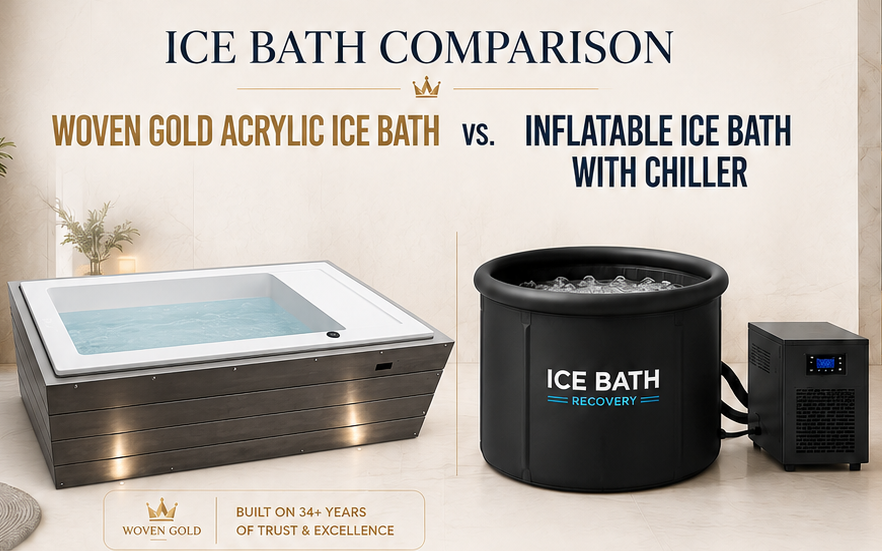
A water bath chiller connected to an inflatable vessel continuously cools the water to a set temperature, which is useful. But the tub and chiller remain two separate things to manage, and the chiller typically reads its own temperature rather than the actual water in the tub.
An acrylic ice bath with a built-in cooling system works differently. The compressor sits concealed within the unit, temperature is measured and maintained at the tub level, and everything is controlled from a single panel mounted on the unit itself. What you set is what you get, session after session.
The Case for Ice Baths (They’re Not Obsolete)
Don’t write off the classic setup just yet. For someone just getting started with cold exposure, a simple ice bath, a standard tub, a bag or two of ice, and a thermometer are still among the most accessible entry points. The cost is minimal upfront, there’s nothing to install or troubleshoot, and for two to three sessions a week, it absolutely does the job.
The real challenge arises over time. Buying ice regularly gets expensive. Temperatures are hard to control. Water hygiene becomes an issue if you don’t drain and refill after every use. What starts as a simple habit can quietly become a logistical headache.
Advantages and Full Comparison of Acrylic Ice Bath vs Inflatable Ice Bath with Chiller
| Feature | Acrylic Ice Bath with Chiller | Inflatable Ice Bath with Chiller |
| Key Advantages | Premium acrylic build, precise tub-level temperature control, concealed compressor, spa-like aesthetics, built for long-term use | Portable, lower upfront cost, easy to store, accessible entry point |
| Tub Material | Premium acrylic shell | Inflatable PVC/fabric construction |
| Durability | Highly durable, long-lasting | Less durable; prone to wear and punctures |
| Insulation | An insulated structure maintains temperature | No insulation or limited insulation |
| Tub Size | Larger bathing area | Generally smaller and more compact |
| Cooling Performance | Approx. 8 to 9°C per hour | Approx. 3 to 4°C per hour |
| Chiller | Concealed within the unit | Externally exposed |
| Compressor System | High-performance compressor | External compressor setup |
| Aesthetics | Premium spa-like appearance | Functional with visible equipment |
| Outer Finish | Four-side all-weather-resistant skirting | Usually no skirting enclosure |
| Water Level Monitoring | Built-in water level sensor | Generally not available |
| Temperature Management | Measures and maintains the actual tub temperature | Typically senses chiller temperature only |
| Control Panel | Mounted on the tub for easy access | Located on the external chiller unit |
| User Convenience | Smooth, all-in-one operation | Requires access to an external machine |
Building a Safe Cold-Recovery Setup at Home
Whether you go with an ice bath with a chiller or an acrylic ice bath, the fundamentals of a safe setup remain the same.
Select the Right Vessel
Not every tub is built for regular cold exposure. If you’re planning a consistent cold-plunge routine, look for vessels built from sanitaryware-grade acrylic with an insulated structure that helps maintain temperature between sessions. A unit where the chiller is concealed within the body, rather than attached externally, also makes a meaningful difference to both usability and the overall look of the space. Working with a quality bath tub manufacturer makes a real difference; the construction of the tub itself affects both safety and longevity.
Mind Your Temperature Range
For most healthy adults, the sweet spot for therapeutic baths falls between 10°C and 15°C. Woven Gold’s acrylic ice bathtub can operate across a range of 5°C to 30°C with the ability to bring water down from 20°C to 4°C in around three hours, cooling at approximately 8 to 9°C per hour.
That kind of performance range gives both beginners and seasoned practitioners room to work within their comfort level. Going too cold too soon isn’t a flex; it’s a risk. Always ease in gradually and keep early sessions short.
Never Soak Alone
It’s essential to have someone nearby during a cold water immersion. Cold water can cause a rapid physiological response, including a spike in heart rate, quickened breathing, and a sharp shift in blood pressure. Therefore, it’s important to have someone available in case of an emergency. At the very least, let someone know you’re doing a session.
Keep Sessions Short and Structured
For most recovery purposes, two to five minutes in the designated temperature range is sufficient. Going longer doesn’t necessarily mean better results; it increases the risk of hypothermia, especially in unheated environments. Always use a thermometer to ensure the water temperature is within the desired range. Do not rely on touch alone.
The Hygiene Factor Nobody Talks About Enough
If you’re setting up a chiller-based system, water hygiene deserves serious attention. Drain stagnant water regularly to keep bacteria at bay.
A well-designed acrylic ice bath holds approximately 210 litres, striking a practical balance between full-body immersion and manageable water changes. Its insulated structure also helps maintain temperature between sessions, which means the unit isn’t working harder than it needs to, and water quality is easier to manage. Full water replacement every one to two weeks is a reasonable baseline. Adding food-grade hydrogen peroxide or ozone filtration can extend water quality between changes.
For ice bath users, the answer is simpler: drain completely after every session.
Is a Chiller Worth the Investment?
For someone doing cold exposure two to three times a week, the answer leans towards yes, particularly over a one to two-year horizon. The cost of regular ice purchases adds up quickly, and the consistency a purpose-built chiller unit provides makes the habit far more sustainable.
A luxury bathtub that cools at approximately 8 to 9°C per hour, maintains precise temperatures across a 5°C to 30°C range, and houses everything within a single premium acrylic shell stops being just a recovery tool. It becomes part of a considered, intentional home wellness space.
That level of control and finish, built into the unit itself, is what separates a proper cold plunge setup from a makeshift one.
Final Thoughts
Cold recovery done well isn’t about extremes. It’s about consistency, control, and doing it safely enough that you can keep doing it. The ice bath with chiller versus acrylic ice bath question is ultimately about where you are in your practice and where you want to go. Both setups have merit, and both can be built at home without a major renovation. We at Woven Gold have long understood that wellness at home is an investment in how you live, not a compromise.